ATS-Friendly Résumés

Most companies screen applications using software called an ATS (Applicant Tracking System). A résumé that looks clear to you may be misread or partially ignored by these systems.

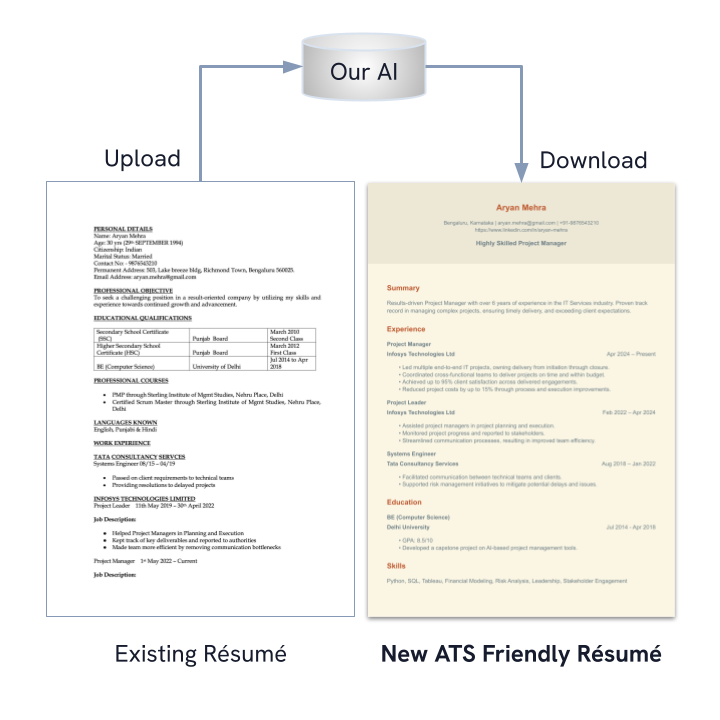
Upload your résumé to simulate how ATS software reads it. Our AI identifies and fixes common parsing issues to make it ATS-friendly. Preview your improved résumé for free, and download it for if you like what you see.

To upload your existing résumé, drag the file here

or

ATS Myths & Recommendations

Our AI applies these recommendations as guardrails to help every resume it generates stay ATS-friendly.

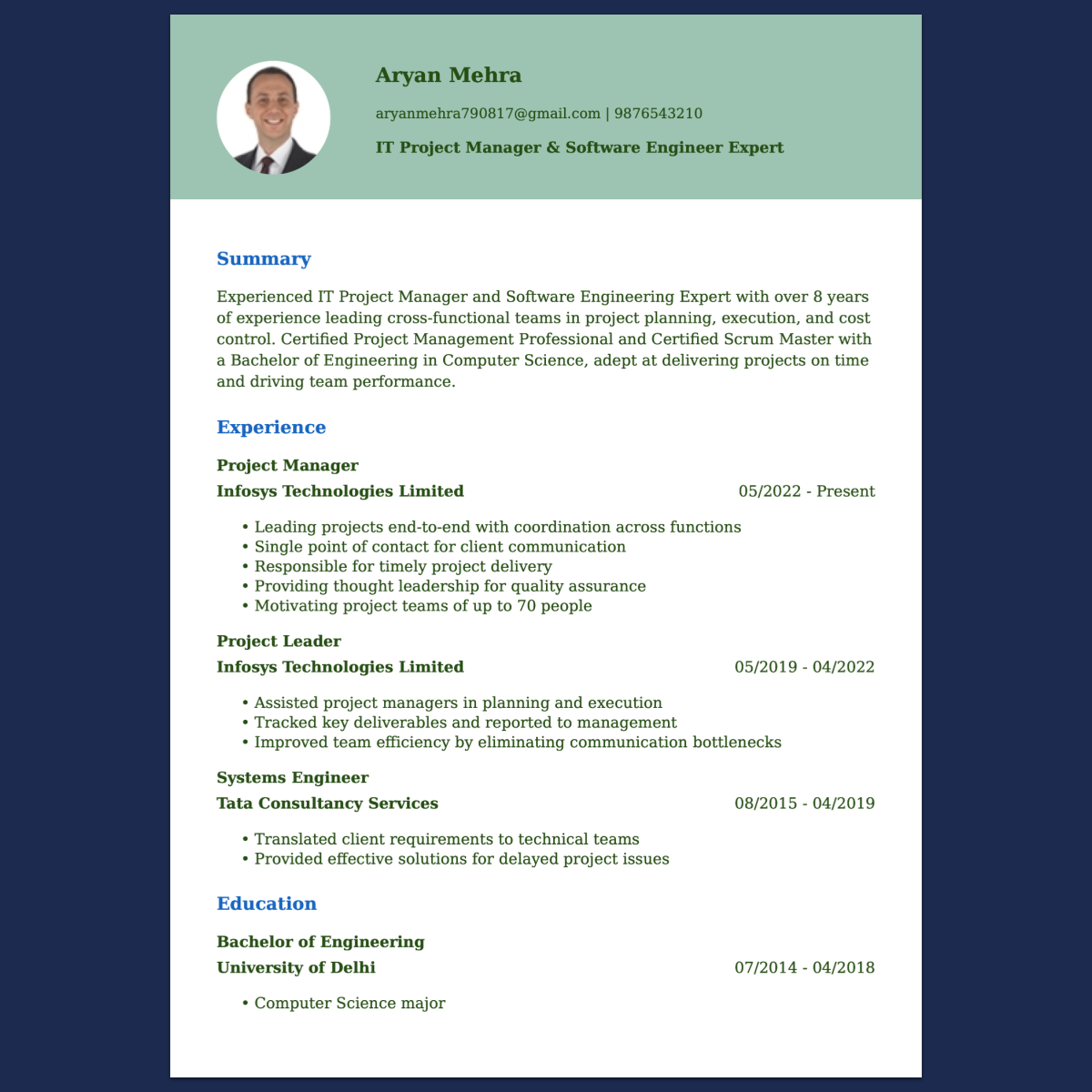
Myth 1: Adding a profile photo improves your chances

Reality: Most ATS systems ignore images completely. Photos are not parsed into candidate data.
But there’s a compliance risk (bias, anti-discrimination policies), especially in MNC hiring.

Recommendation:

  • Skip photos
  • Include a link to your LinkedIn profile for visual presence
Myth 2: Creative section names make your resume stand out

Reality: Many ATS rely on standard section headings to classify resume content. Creative names can reduce section weighting or misclassify important details.

Recommendation:

  • Use headings like Summary, Experience, Skills, Education
  • Prioritize clarity over creativity
Myth 3: More keywords always means better ranking

Reality: ATS systems look at placement, recency, and relevance—not just repetition. Keyword stuffing can hurt readability and credibility.

Recommendation:

  • Use keywords strategically
  • Place them in headline, recent experience, and skills
Myth 4: One resume works for every job

Reality: Recruiters search using different keywords for different roles. A generic resume may rank lower for many jobs.

Recommendation:

  • Customize your resume for each job
  • Update headline, summary, and recent experience bullets
Myth 5: Fancy designs and templates improve your chances

Reality: ATS systems read text, not design. Complex layouts with icons, and tables can break parsing.

Recommendation:

  • Use a clean professional layout
  • Prioritize readability over decoration
Myth 6: ATS rejects resumes automatically

Reality: In most cases, ATS stores resumes, enables recruiter searches, and helps rank results. Humans usually make final decisions.

Recommendation:

  • Optimize for discoverability
  • Focus on search relevance, not beating a bot
Myth 7: PDF is bad for ATS

Reality: Modern ATS usually parse PDFs well if they are cleanly structured. Problems come from complex layouts or embedded visual text elements.

Recommendation:

  • Use clean PDFs or DOCX files
  • Avoid overly designed templates
Myth 8: ATS understands resumes like a human

Reality: ATS is pattern-based and keyword-driven. It may miss nuance, creative wording, or implied meaning.

Recommendation:

  • Use clear and standard language
  • Prefer common job titles and skill names
Myth 9: Job titles don’t matter much

Reality: Job titles are one of the highest-weight fields in ATS ranking and recruiter searches.

Recommendation:

  • Use industry-recognized titles where possible
  • Avoid quirky or unclear titles
Myth 10: Company-specific jargon is fine

Reality: Internal company terminology may not match recruiter searches, making your experience harder to find.

Recommendation:

  • Translate internal terms into industry-standard language
  • Use titles recruiters actually search for
Myth 11: All experience is weighted equally

Reality: Recent experience usually carries more weight than older roles. Older keywords may contribute less to ranking.

Recommendation:

  • Focus optimization on your last 1–2 roles
  • Lead with recent, relevant achievements
Myth 12: Skills section is optional

Reality: Many ATS systems explicitly index skills sections and use them in filtering and matching.

Recommendation:

  • Include a dedicated skills section
  • Use searchable, relevant keywords
Myth 13: Longer resumes perform better

Reality: Resume length alone does not improve ranking. Relevance, clarity, and keyword placement matter far more.

Recommendation:

  • Keep content concise and relevant
  • Remove filler and repetition
Myth 14: ATS penalizes career gaps

Reality: ATS generally parses dates but does not judge gaps. Human reviewers may interpret them later.

Recommendation:

  • Present dates clearly
  • Be ready to explain gaps if asked
Myth 15: You need to beat the ATS

Reality: ATS is usually a search and organization tool, not an enemy. The goal is to match recruiter searches effectively.

Recommendation:

  • Think like SEO: match relevant searches
  • Optimize for visibility and clarity

Used by professionals from

...
...
...
...
...
...
...
...
...
...
...
...
...
...
...
...
...
...

and hundreds of other companies

Frequently Asked Questions

Why bother?

If your résumé contains design elements that trigger parsing errors, a recruiter may never see it. Visually impressive résumés are often structurally fragile for ATS. Today, a résumé doesn’t just need to look good. It must also be readable by machines.

How does it work?

  • Upload your résumé
  • Let our AI create an alternative version
  • Compare how ATS systems parse both versions
  • Decide whether you need the alternative

What if I need an urgent fix?

Our product is self-service. You’ll see a preview within 60 seconds of upload. If you like what you see, simply pay to download the résumé.

Is there a money-back guarantee?

Yes. If you’re not fully satisfied, email us at founders@careernodes.com within 24 hours for a full refund. No questions asked. We don’t want your money unless you’re super-happy with your purchase.